Redesigning triage pathways to reduce the neurology wait times for obstetrics patients through service design
My Role
UX Researcher
Service Designer
Team
3 Neurologists
4 OB/GYN physicians
2 Nurse Practitioners
2 MTDM Pharmacists
2 UX Researchers
Methods
Stakeholder mapping
Survey design
Semi structured interviews
Affinity mapping
Insight Synthesis
Service Blueprinting
Workflow Mapping
Tools
Microsoft Excel
Miro
Mural
Figma
Timeline
Jun 2025 - Aug 2025
Headache disorders are a widespread yet under-treated health issue, with women disproportionately impacted. At Geisinger Health, the Gynecology department serve as the first point of contact for pregnant or postpartum patients experiencing headaches
At Geisinger Health, we identified a critical gap in care delivery. OB/GYN providers directly referred patients with headache to neurology, by default, despite the level of severity. This created a cascading effect -
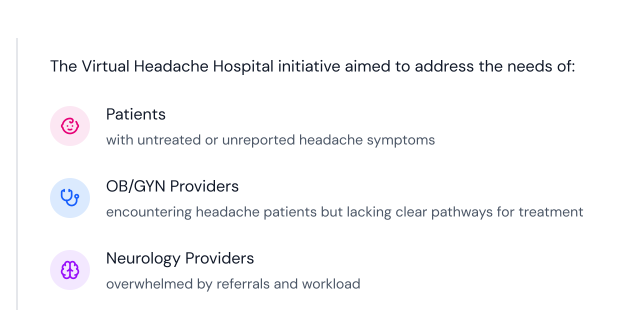
Ensure that OB/GYN patients receive specialist-level care while empowering OB/GYN doctors to confidently identify, triage, and treat appropriate headache cases themselves?
THE SOLUTION
RESEARCH PROCESS

Quantitative Survey (n=21)
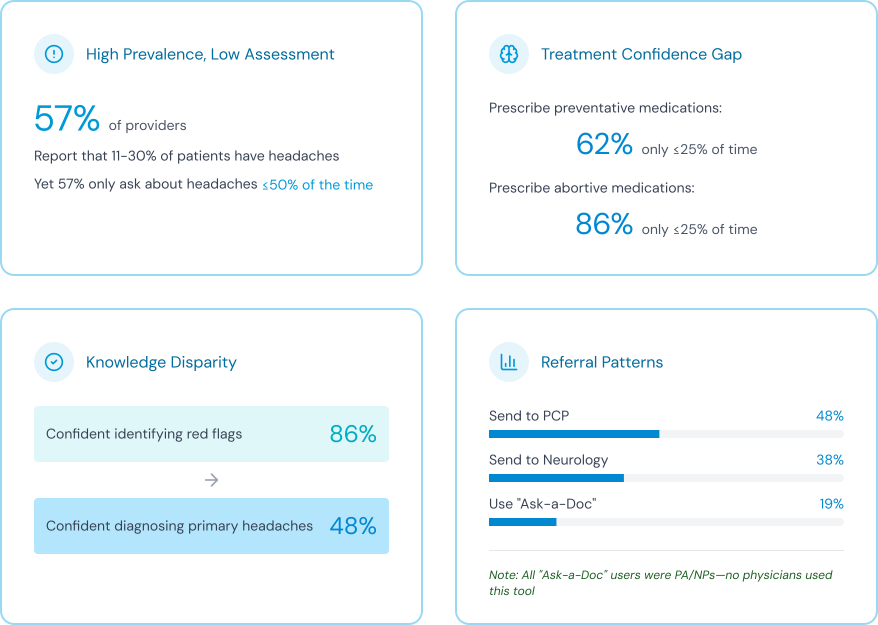
Working with the Neurology department, I helped design and analyze a survey sent to the Gynecology department to uncover the root causes of over-referral. The questions focussed on how frequently OB/GYN patients experienced headaches, how comfortable the Gynecology doctors felt dealing with headaches in pregnant women and how it differs in high risk pregnancies vs. normal pregnancies. The survey revealed significant gaps in systematic screening and treatment confidence.

Respondent Breakdown:
1 nurse supervisor
Interesting Pattern
All providers who used the "ask-a-doc" internal consultation feature were Physician Assistants or Nurse Practitioners. No physicians reported using this resource, suggesting a hierarchical or workflow barrier.
Qualitative Empathy Sessions
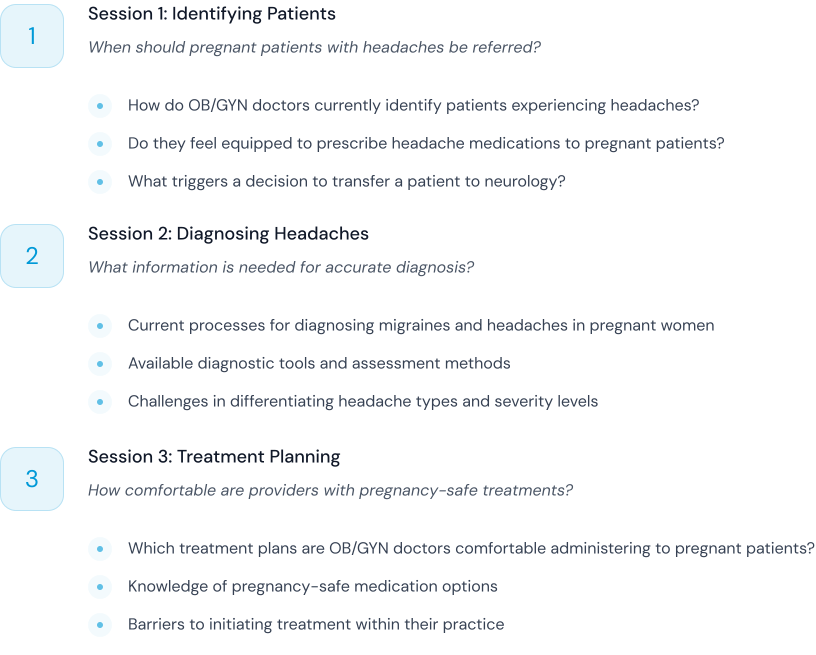
Following the survey, I helped facilitate three empathy sessions bringing together neurology and OB/GYN providers to deeply understand current practices, pain points, and needs across the patient care journey.
Affinity Mapping
I conducted affinity mapping with findings from both the survey and three empathy sessions, organizing hundreds of data points into meaningful themes and patterns.
The Yellow Notes - Quotes from the Empathy Sessions. Each row represents findings from one session
The Orange Notes - Insights and connecting ideas corresponding to the quotes
The Blue Notes - Actionable items / building blocks for the next session

The details of the notes have been blurred to protect PHI [Protected Health Information]
IDEATE PHASE
Ideation Session
From this synthesis, I created a Framework for Collaboration that structured our findings into actionable categories. This framework was used to work on develop the solution with our stakeholders.
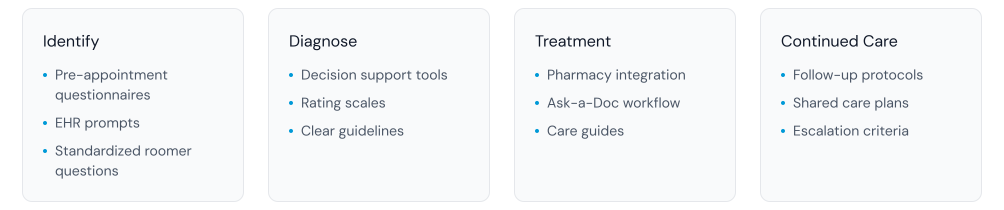
THE SOLUTION
Iteration 1: Service Design Blueprint
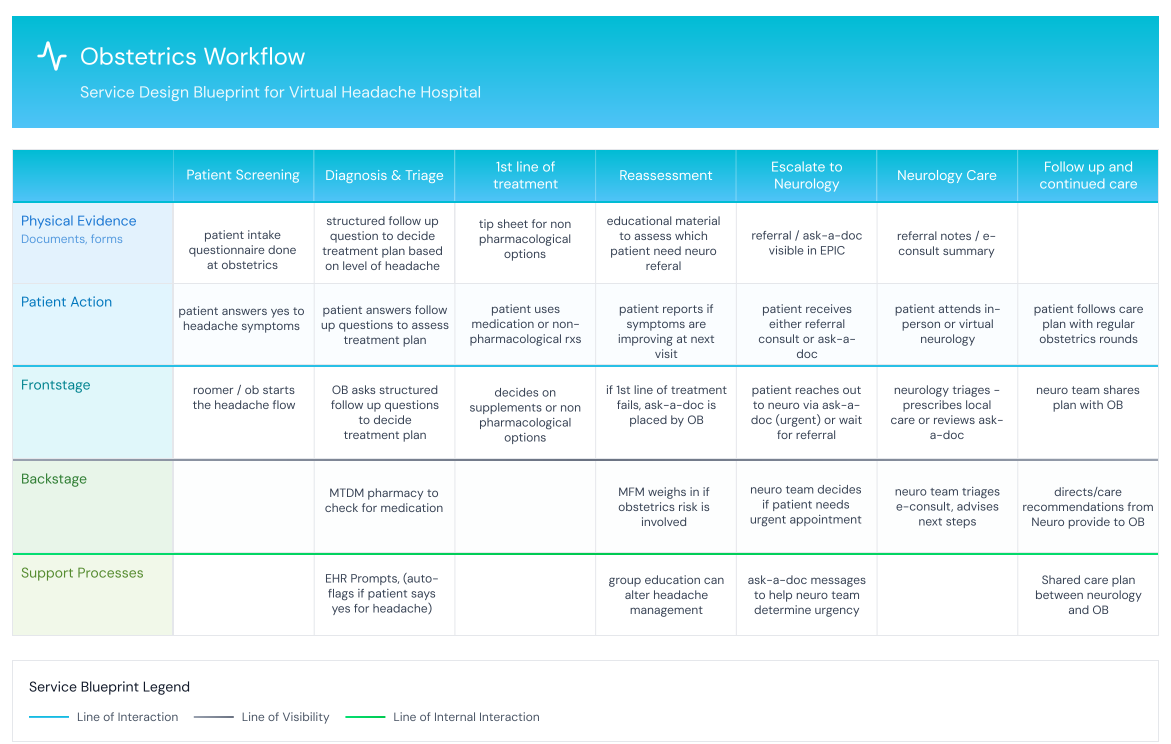
What didn't work?
We presented this as a proposed solution to Neurology and gathered their feedback. The team found it overwhelming to comprehend the different stages in the design. The blueprint attempted to capture every possible scenario, touchpoint, and handoff across seven stages of care. While comprehensive, it included:
Multiple decision trees at each stage
Detailed role definitions for 6+ different provider types (OB doctors, roomers, pharmacists, MFM specialists, neurologists, case managers)
Numerous parallel pathways for different patient scenarios
Extensive backstage coordination requirements
Multiple support systems that needed integration
Interesting Pattern
In healthcare settings with limited time and resources, the most implementable solution isn't always the most comprehensive one. Providers need workflows that integrate into existing routines with minimal cognitive load.
Iteration 2: Streamlined Clinical Workflow
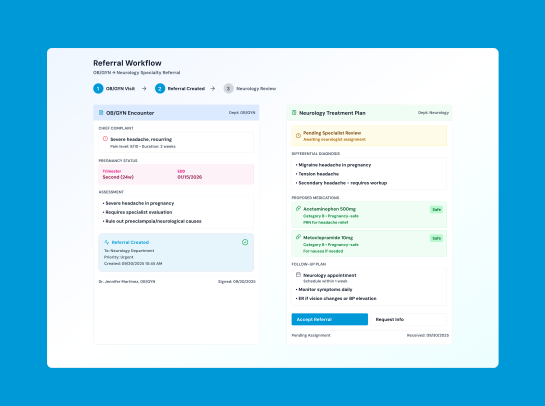
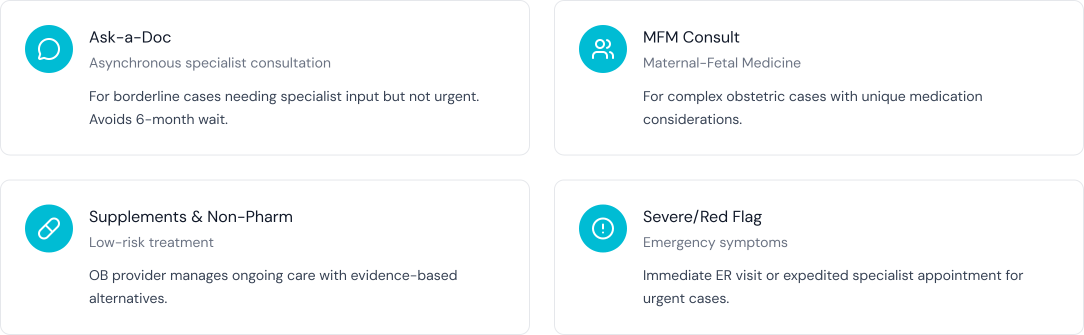
Based on stakeholder feedback, I distilled the most critical, high-impact elements into a practical workflow with clear decision points and four defined care pathways. These weren't new findings. They were simply easier pathways that could be integrated into the clinicians current workflows to enhance them
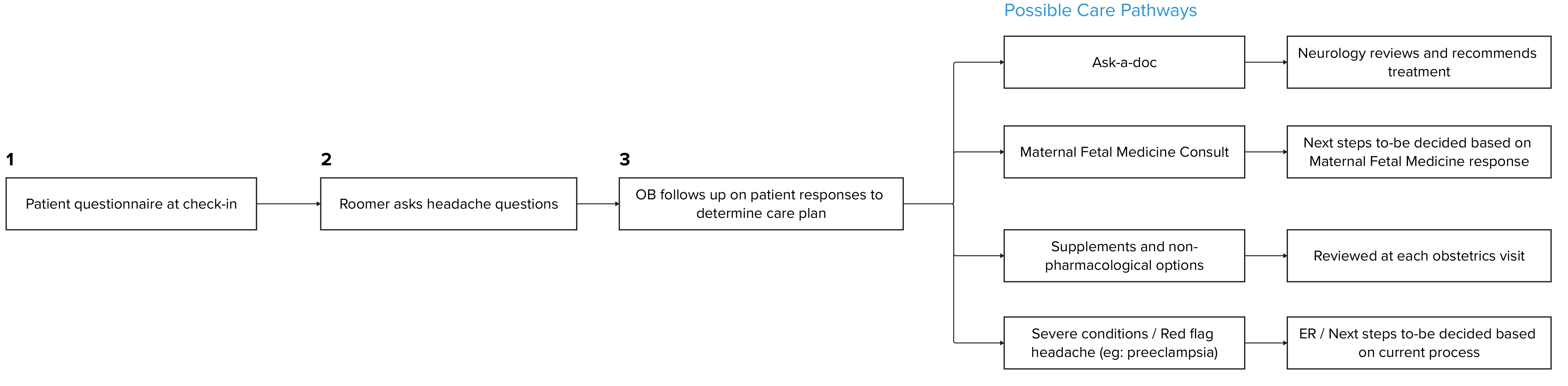
IMPACT & NEXT STEPS
Outcome
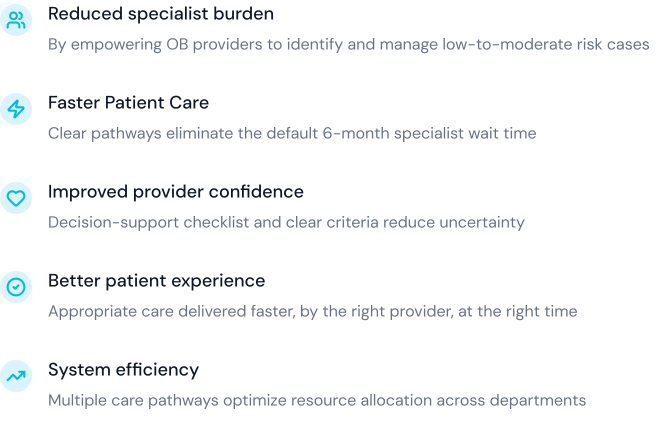
The OB/GYN headache care pathway was accepted by Neurology leadership and formally proposed to the OB/GYN department. The workflow is currently in the implementation phase. With the new workflow, we expect to have:
Before vs After
How the solution addresses specific use cases:

MY ROLE
When this project started, there was no playbook. Both departments came to us with challenges, but how we'd uncover the root problem and what methods we'd use was entirely open. We started with a survey to understand prevalence and patterns, then diving deeper with structured empathy sessions across three care stages, an idea from the Neurology three step care. I designed the research instruments, helped facilitate the sessions, and chose affinity mapping to make sense of the data. Beyond research design, I managed complex stakeholder dynamics. Neurology wanted fewer referrals, OB/GYN wanted more support, and both needed to feel heard and involved in the solution. I suggested co-design workshops to build solutions collaboratively rather than presenting finished recommendations. When the comprehensive blueprint overwhelmed stakeholders, I took their feedback seriously, pivoted the approach, and simplified it into an implementable workflow. Everything, from the research methods to synthesis techniques to solution frameworks had to be designed from scratch, and it was incredibly rewarding!
REFLECTION & LEARNING